Is your air conditioning system ready to face the heat of summer in Arizona? Now is the best time to make sure your air conditioning unit is in top condition. Trust us when we say, you don’t want an air conditioning emergency when summer rolls in.
We cannot stress this enough: pre-season tuning up will save you from loads of inconveniences. Your air conditioning system must be thoroughly inspected and minor flaws should be fixed to prevent major HVAC disasters.
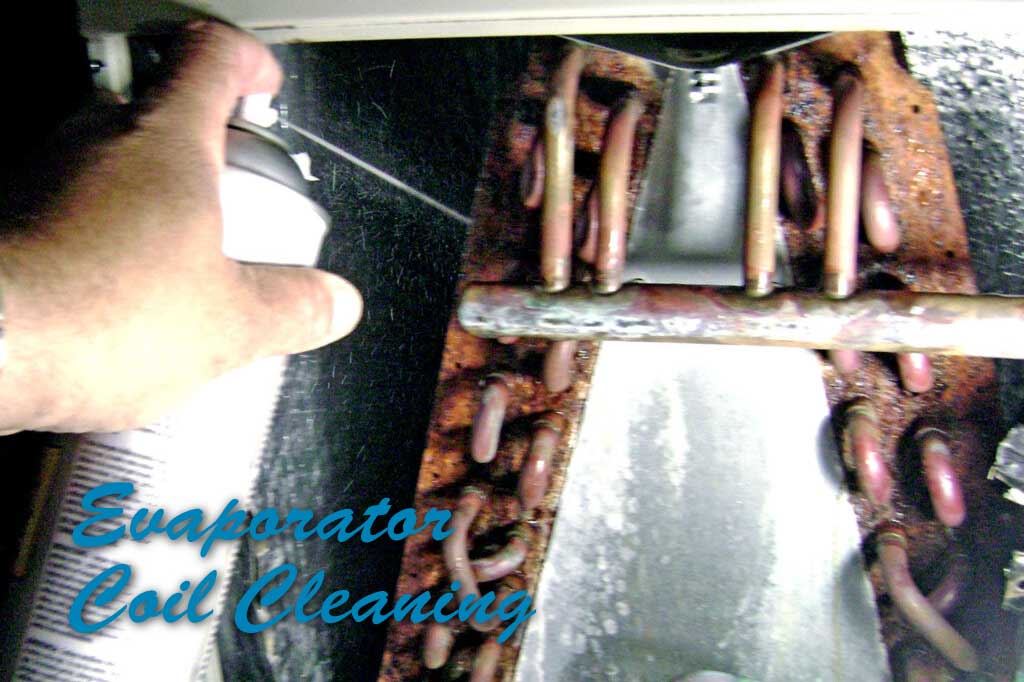
The evaporator coil is one component that must be cleaned and tuned up regularly. Many homeowners only go as far as cleaning air filters and replacing disposable ones. That’s a good practice, but take it a step further by cleaning evaporator coils to ensure a consistent supply of cool air in your home.
The Importance of the Evaporator Coil
The air conditioning system is divided into 2 main parts: the indoor unit and the outdoor unit.
You will find the evaporator coil in the indoor unit, or the air handler, together with the air filter and the blower fan. The outdoor unit, on the other hand, has the compressor and the condenser coil.
The coolant called refrigerant flows between the indoor and outdoor units, absorbing heat from the inside and releasing it outside the house. The fan blows air over the evaporator coil, and the evaporator coil is then responsible for cooling the refrigerant so that it can do its job and absorb heat. Once it absorbs heat, the refrigerant flows to the outside unit where compression and pressurization happen to turn the refrigerant into a hot gas.
Effects of a Bad Evaporator Coil
What happens when the evaporator coil stops working properly?
Generally speaking, the evaporator coil affects the whole HVAC process. When it is not working properly because of dust, leaks, frozen ice, or other causes, it reduces the efficiency of the air conditioner to cool your home and reduce humidity in the air.
Without the evaporator coil, the refrigerant cannot perform its function properly. And we know that without the refrigerant, no cooling takes place. The HVAC system is a complex system of interrelated processes. One component’s weakness will eventually cause the failure of other components. We see that again and again, whether it’s the air filter, the AC coils, or the thermostat that is going bonkers.
When one component affects the HVAC system’s performance, you can expect energy consumption to increase. This is true for evaporator coils too. The air conditioner uses more electrical energy to compensate for the bad evaporator coil.
Unfortunately, no amount of energy will fix evaporator coil issues. In fact, the opposite is true. As the air conditioner struggles to provide cool air, it puts the whole system at risk of major system breakdowns and a shorter AC lifespan.
Like the air filter, the evaporator coil needs cleaning and maintenance. Unlike the air filter, you are better off with a professional air conditioning technician doing the routine evaporator coil tune-up for you.
In Phoenix and other cities in the Valley, AC maintenance is a must before the start of the summer season. It gives you a number of benefits that ensure your summer is as perfect as it can be.
Coil cleaning ensures the coils are in excellent condition to meet the cooling demands of your home, especially in summer.
Cleaning the evaporator coil gives maintenance technicians the chance to fix minor issues before they become full-blown AC problems.
Clean coils allow the AC system to run on lesser energy, effectively reducing energy consumption and energy bills.
Smart homeowners don’t skip coil cleaning. It’s a simple task that has loads of benefits to reap.
Contact Us
For your peace of mind and your convenience, call Air Care Cooling & Heating LLC for a fast and efficient maintenance service. Our professional technicians follow a maintenance checklist that includes a thorough inspection and tuning up of the air handler, including the evaporator coil. The coil is cleaned and ensured to be in excellent shape to provide consistent cool air to your home.
One important aspect of taking care of an HVAC unit, which is often forgotten, is regular duct cleaning. This is what you should know about duct cleaning for the HVAC unit in your home. Why is Duct Cleaning So Important? Ducts are a vital component of your HVAC system because they help the cold and hot air travel throughout the unit and back to different parts of the house.
Is Duct Cleaning necessary?
Dirty air ducts can result in a variety of health problems for your entire household, such as allergies, asthma, and even worse. These health problems can sometimes be avoided, however, by performing routine duct cleaning services on a regular basis. You might be surprised at how much dirt and debris can be built up in your air ducts without you even knowing it. Ducts can become clogged with dirt and debris throughout the years, which is why regular maintenance is so important.
Types of Duct Cleaning
There are 2 methods of cleaning ducts that are generally accepted as the industry standard.
Method #1
The first one is called the negative air method. It involves putting the entire ducting system under negative pressure. This is accomplished by attaching a large negative air machine, essentially a really large vacuum to the ducting system. The negative air machine is also known as an air scrubber. The air scrubber is equipped with a HEPA filter to collect and filter out all the fine particles and harmful bacteria. A rating of 2000 CFM (cubic feet per minute) airflow or more is recommended to create proper negative pressure.
The air scrubber puts the entire duct system in a vacuum (negative pressure condition) due to pulling air out of the ducts. Each supply and return vent has to be plugged for this to be accomplished. The only vent that will be unplugged is the one you are working on. So you will work throughout the system one vent at a time, until all vents are cleaned.
While the duct system is under negative pressure and all vents are plugged except the one to be worked. The duct cleaner will then use a series of tools to disturb and knock loose all the debris in the ducts to be then be pulled into the air scrubber by way of high CFM negative pressure.
Method #1 tools used
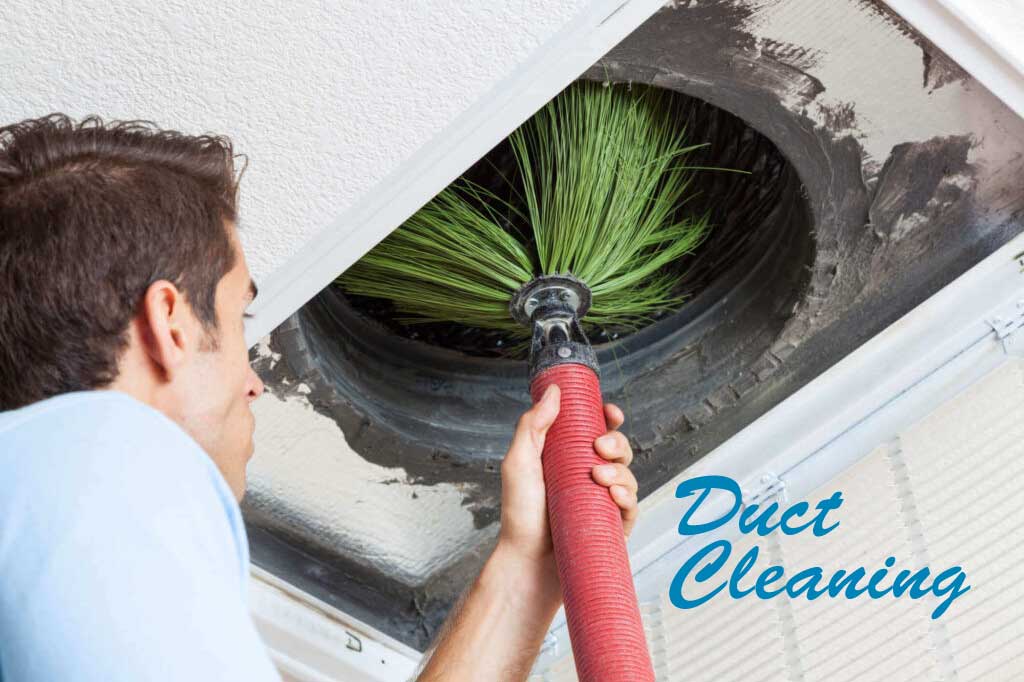
The tools used to disturb, knock loose and clean up harmful debris varies. One of the tools used is a duct snake. It consists of a long tube that has a rotating center core, that is connected to a large rotating brush on the end. It’s similar to a plumbing snake but instead it’s designed for ducts.
It is powered by a variable speed motor, the duct cleaning technician carries a remote switch that controls the speed and rotation of the brush. The technician stands on a ladder pushing the snake through the ducts controlling the snake with his remote. This causes the debris to be removed from the inner walls of the ducts and then flow to the air scrubber for collection and disposal.
The other tools operate under the snake principles as the duct snake. They dislodge dirt, bacteria, and debris to be swept away into the air scrubber. Instead of being powered by a variable speed motor and remote control. They are powered differently.
An air whisk is powered by compressed air. It operates by using the compressed air to propel itself forward into the duct being cleaned. While moving forward it is bouncing around and hitting the ducts with its cleaning head and compressed air swishing away all debris into the air scrubber.
Another tool is the expandable manual brush. It is made up of interchangeable brush heads to match the size of the vent to be cleaned. It also has a flexible fiberglass shaft with metal threads on the end. The threads are what make it expandable, by connecting more shaft extensions in 5 foot increments so it can reach the desired distance into the vent. This tool is usually limited at about 25 feet length.
Dusting the vent for air conditioning filter in ceiling of modern home
Method # 2
Rotating brush with vacuum source. This is often referred to as the roto brush method. Though Rotobush is a brand of duct cleaning equipment, they pioneered this type of duct cleaning. So that’s why the method and their brand get used interchangeably.
This method is limited in power and cleaning capacity due the lack of power of the vacuum vs method 1. This method is generally reserved for residential applications. The main benefit to using this method is quicker job times and in turn cost savings to the customer.
Method #2 types of vacuum sources
The rotating brush with vacuum source method is a very effective way to clean vents. It can be powered by a vacuum that is portable ( roto brush method). The vacuum source can also be powered by a “ truck mount “ . A truck mount is a large gas powered machine that is normally installed in a cargo van, or a cargo trailer. This is the same machine carpet cleaners use to clean carpet and tile.
The rotating brush with vacuum source method consists of either a portable vacuum source (Rotobrush) or a truck mount vacuum source. Both sources contain hepa filters and have a long vacuum hose attached and extending out to a rotating brush on the other end.. In the center core of the long vacuum hose contains a rotating shaft connected to the brush head on the end. It is controlled the same way the duct snake is as mentioned in method 1.
To clean vents with method #2 the operator is pushing and pulling the rotating brush throughout each vent in the ducting system. All dirt, bacteria, and debris is then sucked into the vacuum on the end of the hose that has the rotating brush coming out of it.
The difference between methods 1 and 2 of duct cleaning is mainly the power and source in which unwanted debris is collected and disposed of.
Who to call for duct cleaning?
There are many different service providers that offer duct cleaning services for your home or office building. A quick search on the internet should yield several results, depending on the size of the building and the amount of vents to be cleaned.
There are companies that have portable duct cleaning machines and or truck mounts. These are questions you may want to ask before hiring them so you know exactly what you are getting for your money. For your vent cleaning needs you should only consider certified licensed companies.
If you don’t already have this service done on a regular basis, you should consider having it done. Your health is dependent upon it!
Who should be doing the cleaning of your vents?
Duct cleaning services should be performed by licensed HVAC contractors, who are trained in inspecting and maintaining the ducts in a home or office building. The duct cleaning technician will be working on your HVAC system. The vents are only part of the system but to perform a proper cleaning access will be needed to the air handler coil and other electrical parts of the system to disable it while cleaning is being done, This should only be performed by a qualified licensed air conditioning contractor.
Benefits of Duct Cleaning
A major benefit of hiring a professional service is the prevention of expensive AC repair bills. By getting regular duct-cleaning service for your air conditioning unit, you can significantly reduce the average cost of cooling your house each month. Even if you do not need your air conditioning ducts cleaned, you should at least inspect them once a year for discoloration or other signs of filth. When you keep dirt and particulates out of the air ducts, you can cut down on your air conditioners operating costs. Not only will you save on your AC’s cost, but you will also have the added benefit of reducing your monthly utility bills.
Better indoor air quality
The air quality of the rooms in your house can affect your health, especially if you suffer from asthma or allergies. Professional air duct cleaning services can detect the source of dust or other airborne contaminants and make sure that it is eliminated before it has the chance to spread. A dirty or dusty duct may be the source of dust that triggers an asthma attack, so having it cleaned out can reduce the amount of times you have to deal with this allergic reaction. The same goes for particles that cause allergic reactions to your lungs.
A cleaner home
If an air vent is restricted by dirt, it will reduce the airflow volume but increase its velocity. Think of putting your finger over the end of a water hose. It will also increase the amount of noise in your home. You may even hear a whistling sound. The increased airflow velocity pushes more dust, debris, pollen, and other contaminants into your living space.
It is important to reduce the amount of dust in your home by vacuuming frequently and thoroughly cleaning up excess dirt and debris wherever you can reach. Make sure to keep the doors and windows of your house closed as much as possible during the winter months to keep cold air from entering your house through your windows and doors.
When the weather is cold or hot, turn on fans to help circulate the conditioned indoor air. This reduces the need to open windows or doors to let outside air in. This can also help to keep dirt and debris out of your house so that it is cleaner and more healthy for you and your family to live in.
Only Qualified Licensed Contractors should clean your ducts
If you want to have your ductwork professionally cleaned, be sure to talk to a professional who does this regularly and is a licensed contractor. Always check their online reputation and reviews for any past customer feedback…
A professional duct cleaning company will come out to your home to conduct the inspection and cleaning of your ductwork and give you a reasonable price. There are many unscrupulous unlicensed companies out there operating a bait and switch game. If the deal sounds too good to be true it probably is! After reading this article hopefully, you’ve gained enough insight to make a comfortable confident decision about duct cleaning. Please contact us for any additional information.
Your air conditioning system is only as good as its upkeep. That’s not an exaggeration. That’s a fact. Poor upkeep leads to poor air conditioning performance. Because the truth is, regardless of make and model, every air conditioning system, even the best ones, needs regular air conditioning maintenance.
Many homeowners don’t take annual maintenance services seriously. Many prefer to do it by themselves to avoid maintenance fees. Some put it off until their air conditioner is in trouble. Those make for the perfect summer nightmare, especially if you live anywhere in Arizona.
An air conditioner needs maintenance before the summer heat kicks in every year. That means, now is the best time to call an HVAC technician for an AC unit inspection, cleaning, and tune-up. What can you expect from professional air conditioner maintenance and why shouldn’t you do it on your own?
Understanding how neglect, normal wear and tear, and age put a strain on your AC system will help you appreciate regular system inspection and maintenance services. Maintenance is a job for the pro unless you have proper training, complete equipment, and HVAC knowledge.
Why does the air conditioning system need maintenance?
The HVAC system is a complex system composed of many different parts. Each part or component plays a role that affects the heating and cooling of your home. Neglect, normal wear and tear, and age affect the efficiency of the component, reducing the efficiency of the whole HVAC system.
Aside from heating and cooling your home, the HVAC system also prevents pollutants from contaminating indoor air. Over time this can cause a buildup of dust and dirt and clog air filters and other components.
If not addressed immediately, this can result in weak or insufficient airflow and cause other problems like duct leaks, frozen coils, blocked condensate drain line, low refrigerant levels, overheating blower motor, among others.
Wear and tear are normal for air conditioners, especially as they age, but when not immediately fixed, it will result in poor air conditioning system performance, frequent costly repairs, and shorter AC lifespan.
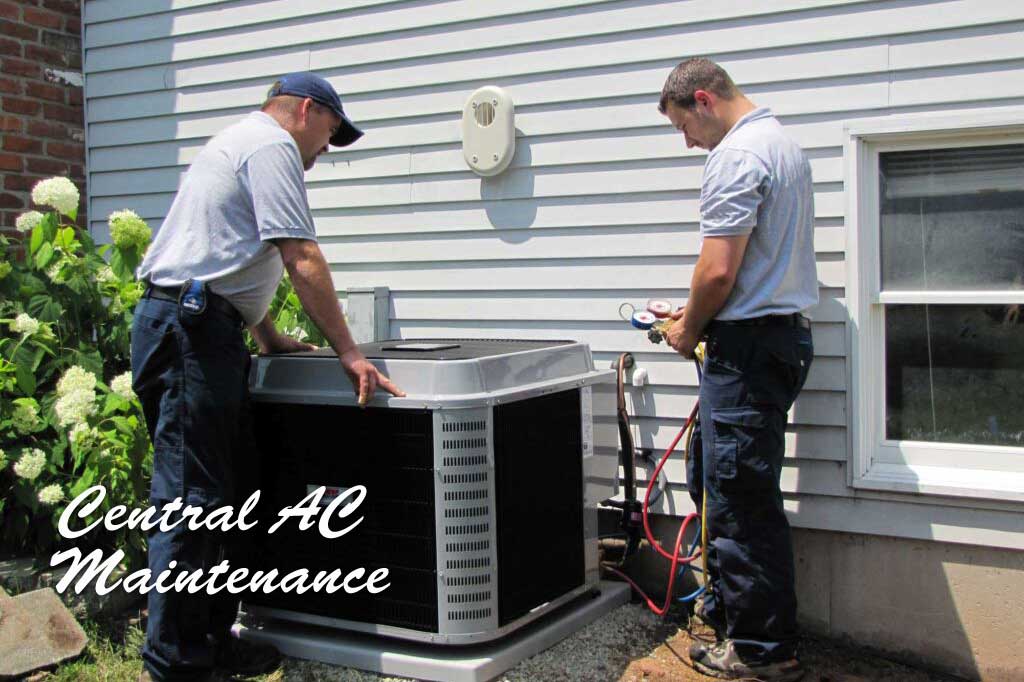
The service inclusions from one heating, air conditioning company to another slightly vary. When you call Air Care Cooling & Heating LLC, our highly trained technicians give a thorough inspection and tune-up of both indoor components and the outdoor unit.
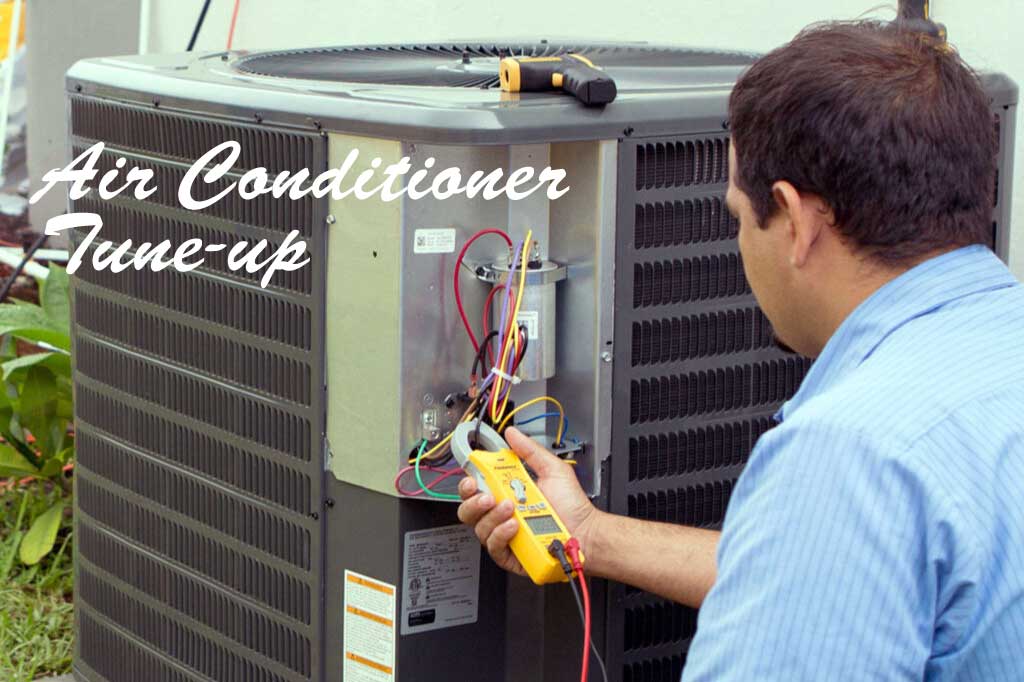
Typically, our services include checking electrical connections, lubricating moving parts, condensate drain examination, fan assessment, refrigerant inspection, as well as the usual inspection of filters, vents, pipes, thermostats, etc.
Another thing that sets Air Care Cooling & Heating LLC apart is the level of service we provide your heating, air conditioning system at home. For instance, we take no shortcuts and always provide customers the right information and the best solutions. We take pride in our thorough, efficient, professional tune-ups.
20-Point AC maintenance checklist
When you call us for cleaning, tune-up, and maintenance services, our professional technicians follow a special procedure, which we rounded off to a 20-point checklist. Here’s what you can expect from us at Air Care Cooling & Heating LLC:
Tighten and safety test all wiring and electrical connections, including kinked wiring inside the condenser, burned capacitor connections and burned fuses.
Lubricate all moving parts to reduce friction.
Clean or replace air filters.
Measure operating pressures and exiting and returning air temperatures. Adjust depending on the manufacturer’s specifications.
Measure refrigerant levels and superheat to charge.
Check thermostat settings and calibrate as needed.
Test the amp draw of the compressor.
Inspect the air handler for leaks.
Drain the condensate lines or flush condensate drain to prevent overflow.
Listen for motor malfunction.
Test run capacitors.
Check blower components, including blower motor, and clean the blower wheel.
Inspect the ducts for leaks.
Inspect control boards for shorts and arching.
Clean outdoor condenser coil.
Meter voltage and amperage in all motors.
Tighten electrical breakers
Check air temperature differential.
Test refrigeration system operations and ensure all is within specifications.
Provide home or business owner a detailed inspection report.
Why is spring (and fall) the best time for HVAC maintenance tune-up?
HVAC technicians strongly recommend air conditioning maintenance in spring or before the heating season kicks in. If you have a heat pump, pre-season tune-ups should be during fall to prepare for the colder months.
Here are 3 reasons why spring (and fall) is the best time for HVAC systems maintenance:
1. Prepare the AC in time for summer
HVAC companies recommend system maintenance in spring because major air conditioning breakdowns are a no-no in summer.
A pre-season cleaning, tune-up, and maintenance service will make sure your cooling system is ready to take on the heat of the summer months and give comfort to your home. A preventive inspection will give the HVAC technician the chance to fix minor issues that are likely to become full-blown problems in summer when the A/C system is under a lot of stress.
2. Save on maintenance and tune-up costs
Summer is the busiest time for AC technicians. When your AC unit breaks down in summer, who knows how soon you can get an emergency repair or replacement service as most air conditioning technicians are heavily booked.
This shortage of professional technicians leads to another disadvantage: expensive repair, replacement, maintenance service costs. The cost to repair, replace, and maintain an air conditioner skyrockets in summer.
To avoid spending more money on preventive heating and cooling services, call a pro from a reputable HVAC company as early as the first few weeks of spring.
3. Warranty compliance
Major air conditioning manufacturers require yearly preventive service as part of the warranty terms. Warranty coverage may be denied if there is no proof of annual preventive maintenance.
4. Improve home comfort and indoor air quality during summer
The summer heat can make your home feel so uncomfortable. A pre-season maintenance service can save you from such uncomfortable situations. While waiting for a professional technician, make sure your AC filters are clean and the vents are not obstructed for consistent cool airflow.
What can you do in between regular maintenance services?
Clean and replace air filters
Clean your air filter at least once every 30 days to prevent the buildup of dirt and debris. A clogged air filter causes weak airflow, which affects other air conditioner components like the refrigerant and the coils. To compensate for insufficient airflow, your blower fan motor exerts a lot of effort and consumes a lot of energy, which leads to higher utility bills.
Keep the area around the condenser coil clean
Keep the outdoor unit free of tall grass, tree branches, garbage, and other possible air obstructions. Make sure it is not damaged by outdoor elements, like wind, water, dust, etc.
Keeping the area around the condenser clean will prevent air flow obstruction.
Clean the evaporator coil
Clean the evaporator coil of dust, dirt, and other debris using a special coil cleaner, a soft brush, or a vacuum. A clean evaporator coil will help maintain the efficiency of the A/C system efficiency and prevent cooling problems.
Make sure vents are not obstructed
Obstructed vents result in uneven temperatures and uncomfortable air quality at home. To prevent that from happening, remove big pieces of furniture, drapes, and other common household things that block air vents.
Preventive Maintenance Plan
As part of our customer service, Air Care Cooling & Heating LLC provides home and business owners a comprehensive preventive maintenance plan. The plan gives customers 2 very important benefits: cost savings and convenience.
Benefits of Air Care’s preventive maintenance plan
Big savings and discounts
Air Care Cooling & Heating LLC’s preventive maintenance plan covers annual cleaning, tune-ups, and maintenance services. Maintenance services costs usually discourage many homeowners. As a result, their heating system and air conditioning system do not get much-needed maintenance.
Air Care Cooling & Heating LLC’s preventive air conditioning tune-up plan is a cost-saving way of taking care of your air conditioner. It covers regular unit inspection, cleaning, and tune-up and helps customers save money in the long run. Ultimately, repair and replacement are more costly than the preventive maintenance plan.
Convenience
Customers who take advantage of our preventive maintenance agreement plan are given service priority over those without. Heating and air conditioning emergencies can happen anytime to anyone. Imagine needing emergency service in summer when air conditioning technicians are heavily loaded.
Air Care Cooling & Heating LLC’s preventive maintenance plan gives customers the peace of mind that comes from knowing no matter when or where an HVAC professional will always come to the rescue.
Different HVAC contractors offer different levels of service. When it comes to air conditioning maintenance, choose a reliable air conditioning company for the job.
In Mesa, Arizona look no further than Air Care Cooling & Heating LLC. Trusted by home and business owners, we know an efficient heating, air conditioning system brings comfort and quality air to your house. We go above and beyond the needs of our customers and put a premium on excellent service so that every house is a place of comfort and safe indoor air.
Your water heater may be all good now, but there will come a time it won’t be. Even the best ones wear down over the years and quite quickly if not maintained properly. To prevent surprise cold showers, watch out for telltale signs that it’s time for a new water heater.
Ask yourself these important questions first: How old is the water heater? Did it come with the old house you purchased or was it recently installed? How often does it get maintenance services? Have you noticed strange noises or rust from the heater?
Typically, a water heater has 10 to 20 years, but several factors may affect those numbers, such as the type of heater, its maintenance or lack thereof, and water quality in your home.
Types of Water Heater
Tank-Style Water Heater
A standard tank-type water heater lasts anywhere from 8 to 12 years, thanks to the sacrificial anode rod inside the tank. The anode rod protects the tank from rusting through the process called electrolysis. The rod attracts corrosive particles to itself so that the inner lining of the tank stays free of corrosive particles.
When the anode rod reaches its limit, those corrosive particles will find their way to the bottom of the tank and slowly destroy the lining. When that happens, it’s only a matter of time before your tank-type heater needs to be replaced.
Tankless Water Heater
On-demand tankless heaters do not work continuously to provide a supply of hot water so they last longer than their tank-style counterparts. Tankless water heaters last 20 years or even more. However, like all equipment, atankless water heater will break and require replacement. Your job is to pay attention to its performance so you won’t be caught in surprise.
Water Quality
Hard water can shorten the lifespan of your heater significantly. It can affect other home appliances or equipment that uses water too.
Hard water contains magnesium, calcium, and other minerals that cause a build-up over time. These minerals become scaly deposits around the heater and reduce the space for water inside the tank.
How do you know you have hard water? Watch out for common signs of a water problem, like a foul smell, rusty or cloudy water appearance, and bad taste. You can use water softeners to treat your water. If the problem persists or if you suspect the problem has affected your plumbing system, contact us and schedule a site inspection with one of our professional technicians.
Water Heater Maintenance
Just like any equipment in your home, proper upkeep, including regular maintenance services, helps extend the lifespan of your heater. If your heating equipment has been neglected or you inherited one from a previous homeowner and you can’t tell if the heater has been taken care of, best to call in plumbing experts.
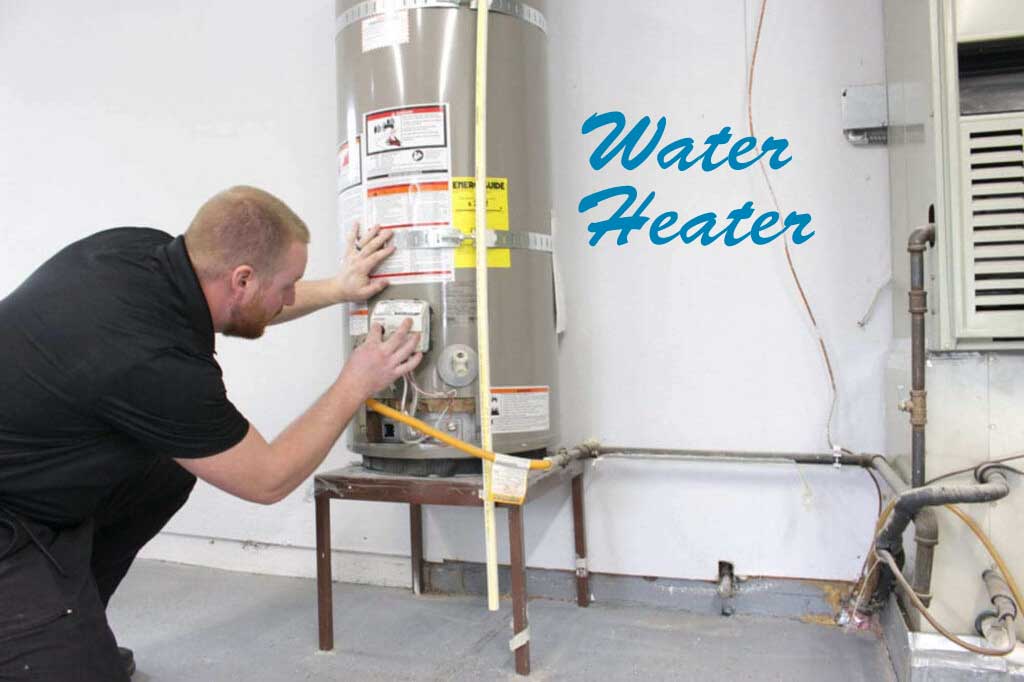
Among other professional measures, our technicians check for hard water, rusty valves and pipes, sediment buildup, and water leaks. They flush heaters to drain particle deposits at the button of the tank. They check the sacrificial anode rod and check thermostat settings.
Signs Your Heater Needs a Replacement
If you notice any of these signs, it’s time to bring in the pro for a thorough inspection and most likely a replacement.
Failure to heat water
Water leaks
Rusting
Strange Noises
It’s also important to know the age of your water heater. The serial number will give you this information but in a different format.
How Old Is Your Water Heater?
The serial number on the manufacturer’s sticker is composed of alphanumeric characters but you only need to understand the first three characters. The first character, a letter, represents the month of manufacturing so that the letter “A” means January, “B” is for February, “C” stands for March, and so on.
The next two digits represent the last two numbers of the year of manufacturing.
Whether your heater has 2 or 10 more years of life left, proper maintenance is a big deal. Schedule annual maintenance services with a plumbing professional and always keep tabs on your water heater’s condition. While you’re at it, pay attention to the condition of the water you use at home too.
If you think the water’s too cold or it smells weird, you can bet it’s not your imagination. Contact us for fast, reliable plumbing solutions.
Keeping your air conditioner running in top condition is crucial to the comfort of your home, especially if you live anywhere in Arizona. To ensure your air conditioner is always in good condition, AC maintenance must be done regularly. If you’re not so sure about that, well, we listed reasons that will definitely change your mind.
AC Maintenance Prevents AC Failure Surprises
Don’t want surprises? Well, an AC failure is a surprise you wouldn’t like, especially during the hot summer months. AC maintenance prevents such from happening.
You don’t want to leave things up to luck and hope and pray that all is well with your air conditioner. Instead, you want to do pre-season AC maintenance and try to identify anything that is wrong with the unit or could potentially go wrong.
A big surprise mid-cooling season means the inconvenience of having an extremely hothouse. By “inconvenience,” we meant to say “horrific experience.” If you live in Arizona and you’ve ever had your AC completely out after coming home from work one evening, then you know exactly what we mean.
The Arizona weather is not friendly to anyone in the summertime. It can be downright brutal. So it’s best to have an HVAC technician clean, tune-up, and maintain your unit. Neglecting to do so is like gambling with your comfort. If you want to gamble, go to a Las Vegas casino instead. The problem with that is you know the old saying, “The house always wins.”
AC Maintenance Lessens Unplanned Repair Expenses
AC preventive maintenance helps prevent unplanned expenses. If you know ahead of time that your AC unit has a problem, then you can actively plan to get it repaired or maintained. I like surprises as much as the next guy, but when it comes to AC units breaking down, that is definitely not a surprise anybody wants.
AC repairs in Arizona can set you back anywhere from a couple hundred dollars to a couple thousand. When your AC is down, you have no choice but to get it fixed, unless you’re willing to pay for the consequences.
Preventive maintenance helps those unwanted expenses, so be proactive and start scheduling your air conditioner’s next maintenance.
AC Maintenance Extends the Life Expectancy of Your Air Conditioner
The life expectancy of your AC unit really stems from two main factors.
The first factor is the quality of the installation performed by the installing AC contractor. The second factor is how well the AC unit has been maintained throughout its life.
If you’re reading this article, chances are you probably already have an AC unit at home so you can’t do anything about the first factor anymore. You can’t uninstall your AC, but you can do something about the second factor.
You see, AC maintenance is extremely important that it will at least double the life of your unit, probably more if done correctly and routinely. Unfortunately, we tend to have the problem of “out of sight, out of mind,” and we forget that there are mechanical pieces of equipment keeping our homes comfortable 24/7. We don’t really think twice about it until there’s a problem.
Having a problem with your AC unit and bearing the cost to fix it is a big problem, but at the same time, it also shortens the life expectancy of your equipment and that is far more costly than the actual repair itself. We all know air conditioners are not cheap. The longer we can make them last, the better off we are.
AC Maintenance Lowers Utility Bills
Without AC maintenance, your air conditioner will cost you more money. Electric bills during the summertime in metropolitan Phoenix range, on average, $400 t0 $500, even $600.
As an HVAC contractor, We talk to homeowners all the time about their electric bills. We’ve seen bills as high as $1,300 a month. That’s why they call us out to do AC maintenance. Is AC maintenance a magic bullet? The answer is no, but there is definitely a correlation between AC maintenance on your unit and the cost of your utility bill.
A basic maintenance can run you $60 or $80. Heck, even if you find an expensive one for $100, it’s still more than pays for itself. Look at it like this: you’re going to spend the money either way. You’re going to either spend it on electricity or on AC maintenance.
The smart money is on AC maintenance. If you see AC maintenance from an investment point of view, you will have AC maintenance done on your equipment every single cooling season. It’s one investment that will never lose value.
AC Maintenance Brings More Comfort to Your Home
When we talk about comfort, we’re really just talking about feeling good or not. Well, to feel good in your home, the AC unit is designed to the specifications and size of your home and must be in proper working order.
If your AC unit is not maintained properly, this will cause either too long of a run cycle or too short of a run cycle. The run cycle is the time your thermostat tells your AC unit to come until the time it tells the unit to shut off. When the unit is running at the proper amount of time (correct run cycle time), it is working to cool your home but the thing that actually makes you comfortable is the removal of the humidity. This can only be achieved by having a clean indoor coil that allows proper airflow and heat transfer .
AC Maintenance Improves Air Quality in Your Home
Who wants quality air in their home? Everyone does, it goes without saying. This cannot be accomplished without proper and regular AC maintenance. Here’s why
The air flowing throughout your home gets cooled by passing through the part of the air conditioner called the air handler, which contains the indoor coil a.k.a. the evaporator coil. This is the part of your system that requires the most maintenance; this is where the air goes after it passes the filter.
The indoor coil is somewhere homeowners never see and for good reason. They are usually located in an inaccessible location tucked away in a basement or attic. They are dark, wet, and serve as a collection point for bacteria and germs. These coils MUST be maintained by a professional. This area should be cleaned and sanitized on a regular basis. This aspect of AC maintenance directly affects the quality of the air you breathe.
These are just a few of the reasons why AC maintenance is important. After reading everything above, you should now clearly understand what the benefits of AC maintenance are.
To recap, AC maintenance saves you from unexpected breakdowns, unplanned repair expenses, a shortened unit life expectancy, unnecessary utility bills, having high humidity (uncomfortable feeling) in your home, and last but not least, breathing unclean or unsafe air.
AC maintenance is like many things in life: the more you put into it, the more you will get out of it.
Contact your local air conditioning maintenance company to schedule your routine maintenance today. You’ll be glad you did.
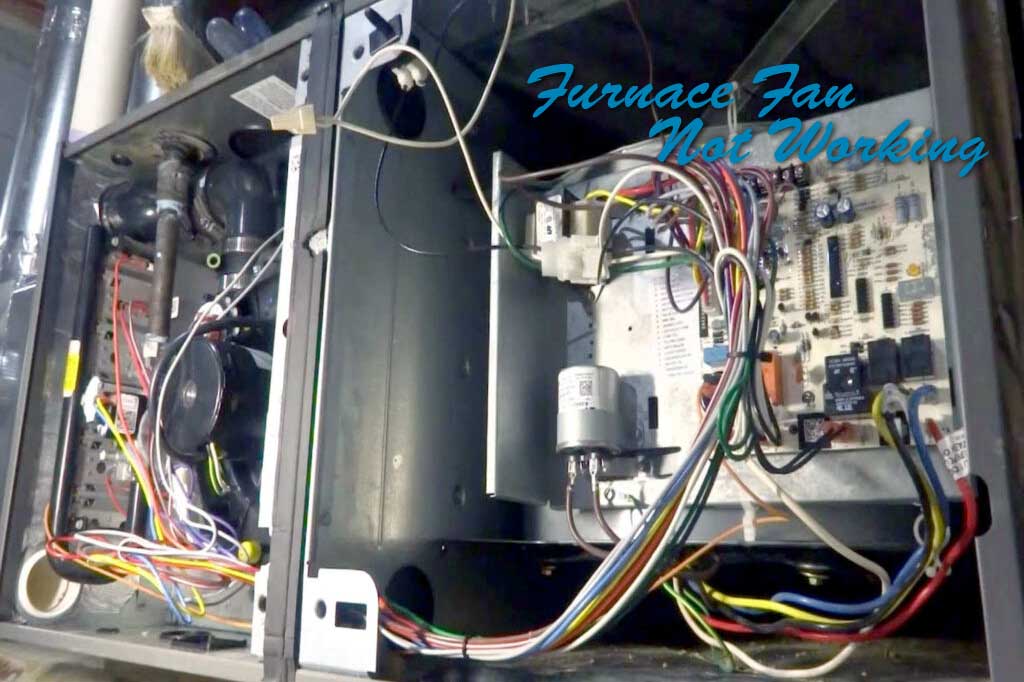
Like air conditioning systems, the furnace is one of the most forgotten pieces of equipment at home一that is, until it stops working properly or stops working altogether. It then becomes a must-have for safety and comfort at home.
Everyone wants quality airflow that is evenly and consistently distributed at home. Unfortunately, much like air conditioning units again, your furnace will inevitably run into problems and will need maintenance and repair. Thus, keep the name and the contact number of your HVAC contractor or technician. Before you call them, there are troubleshooting tips that you may want to try.
Fortunately for homeowners, not all air conditioning and furnace problems are a major cause of concern. Sometimes a heat system issue can be fixed with the help of a user manual and some DIY initiative. However, and this should not be taken lightly, always err on the side of caution. If, for whatever reasons, you think your safety is at risk or you’re not knowledgeable enough about furnaces, call your trusted furnace repair technician ASAP. These technicians have the tools and the experience and expertise to address any furnace issue.
Here’s a list of things you want to check before calling your HVAC technician.
Check the switches
Step 1. Starts off with the easiest: power supply. Whether it’s a furnace service problem or an air conditioner without cold air, check for power supply.
A lot of homeowners forget about this self-explanatory step. Just because the rest of your house has power going on doesn’t mean your furnace has power too.
Furnace switch
A furnace switch may be located on the unit itself or on a nearby wall. Because it looks like a regular light switch, it could be turned off by accident. That may be why there’s no heat from your furnace. Simply put the switch in the On position and you’re good to go.
Furnace circuit breaker switch
Locate the furnace circuit breaker on your breaker panel and make sure it’s in the On position. Your furnace will not function if the circuit breaker is off or when the furnace circuit breaker trips.
A circuit breaker is a safety feature. It’s there to shut off electric current when things go bad with your furnace. If your circuit breaker trips a number of times, that’s a sign something more is going on and you need to call in the professionals to fix the problem.
Limit control switch
“Furnace blower fan limit switch” is quite a mouthful for one switch, but basically, it tells you what the switch is for. Limit switches are safety components in furnaces.
A limit control switch controls the furnace blower fan and turns it on or off depending on the temperature of the furnace. When the temperature is too high, this safety switch will shut off the furnace to avoid overheating.
Turn on the switch if you see it in the Off position. If goes back off again, you’re in for more repair that you can probably handle so call your HVAC technician right away.
Furnace door
Take a look at your furnace door. For safety reasons, a modern furnace will not work if the furnace door is not completely closed. Some units have a switch that the door presses when it’s properly shut.
Simply close the furnace door properly and observe your unit. Some homeowners have noticed the door will slightly open again. If that happens to you too, that’s a sign you need professional repair.
Thermostat
The thermostat determines how much heat is needed by the furnace to function properly. It signals to the furnace to start the heating cycle. It’s a rather simple component but is also one of the most important in a heating system.
The thermostat prompts the furnace to produce heat, which becomes the warm air that circulates around the house. Without the blower motor, air cannot push through the vents. When there is enough warm air in the house or the thermostat reaches its preset settings, the thermostat again sends a signal to the furnace.
The thermostat is an easy furnace part to troubleshoot. It basically involves its setting and its batteries.
Setting
Make sure the thermostat is set on “Heat” and it’s at least 5 degrees above room temperature.
Batteries
If your furnace thermostat runs on batteries, see if it doesn’t flash a low-battery indicator. Batteries on a thermostat don’t last forever. Ideally, a thermostat battery should be replaced every year.
Air Filter
A clogged filter will result in restricted air flow, which will drop the efficiency of the furnace. Clogging happens when the filter accumulates dust and debris. This accumulation will block warm air, reducing the heat in your home.
Cleaning air filters is an easy HVAC maintenance problem you can fix at home. Simply locate your filter and clean it. If the filter has too much dust and debris, it may be time to replace it.
Removing the debris caught in the air filter should be done regularly to avoid clogging. When the air filter is clogged, the blower works harder to overcome the clogging. One small problem will then result in a bigger problem.
Too much strain on the blower motor will cause overheating and bigger electric consumption. Worse, it will shorten the lifespan of the component.
Furnace blower motor and blower fan
The terms blower and fan are often used interchangeably. Basically, both furnace blower and blower fan are used to move air in the HVAC system with the help of the run capacitor. The run capacitor gives the blower and the fan a steady stream of electric energy to keep them running. When the furnace blower motor and the blower fan need repair, you have to call the experts. However, it’s good to know the signs that indicate whether or not a blower motor is faulty or a blower fan needs special attention.
The blower motor and blower fan are important. They are there to overcome the flow resistance of components like pipes and ducts. When either one or both blower motor and blower fan get clogged, this will result in poor air quality and insufficient air flow. How do you know if one of them is the problem?
One, you notice a burning smell. This indicates the fan belt or the fan motor is overheated. Turn off the unit immediately to avoid further damages, and then call your technician. Two, you hear strange noises. Blower fans and blower motors make noise, but when they sound out of the ordinary, you need to call for repair or maintenance right away. When there is insufficient air flow, either of the two components may be obstructed and you finally have to call for help.
Flue Vents or Flue Pipes
Next on the list are flue vents. The flue vent is a pipe or a duct that used to release combustion gases or exhaust. These gases are the by-product of the heating process.
You may have to make a service call to your HVAC contractor if your flue pipe is obstructed, broken, or leaking, but there are troubleshooting tips that you can first do on your own.
Check if there is water leaking from the flue pipe. While you’re at it, check if there is rust in the pipe and if there is soot in your furnace. Those are signs that something may be wrong with the pipe. Soot may also indicate that your heat exchanger has cracked or malfunctioning.
The flue pipe is responsible for removing hazardous gases, like carbon monoxide, from your heating system and releasing them into the atmosphere. When the flue pipe is the issue, you have to call your HVAC technician for immediate repair.
Gas Supply
Unlike heat pumps, your furnace probably uses gas to function. Hence, check if the gas valve is On. Without gas supply, the furnace won’t work at all. If you can smell gas in the air, probably due to a leaking gas pipe, get out of the house immediately and call your gas company.
Vents
Look around your home and see if anything is blocking the air vents. Sometimes big pieces of furniture obstruct the vents so that air can’t circulate properly. This is one simple thing that you should check before calling an HVAC technician for repair. The issue may be staring you in the face
Safety Reminders
Always keep safety the top priority. Make sure to turn off your furnace, air conditioner, or any electric device when troubleshooting to avoid safety hazards.
Refer to the user manual. OEMs expect an HVAC system or a part of it to eventually go bad. Almost all the important things you need to know about the motor, blower, capacitor, fan, furnace control board, heat pump, heat exchanger, and other components in your HVAC system are detailed in the user manual.
Without a user guide, go to the manufacturer’s website with your HVAC’s model number and see if you can find available references.
Signs you need HVAC techs pronto
A little homeowner knowledge helps every now and then, but if you’ve tried everything in this article and your furnace is still not working properly, don’t prolong your bad experience and suffer from cold air.
Bring in the professionals immediately when any of the following occurs:
No heat nor warm air from the furnace – If after all the troubleshooting you did you’re still left with cold air, ask your trusted furnace expert to check your unit.
Your unit is short-cycling- In our recent posts, we talked about short-cycling in air conditioning units. The same is true for furnaces: the unit powers on runs for a short time, then shuts off completely. When this happens, call a professional to solve the problem once and for all.
You can smell gas – A leaking gas pipe is a disaster waiting to happen. Leave your house immediately the moment you smell gas and call your gas company before calling the HVAC experts.
Every furnace will show signs of wear and tear. Although it’s quite an accomplishment to fix things on your own, know when to call the pros. As they say, if symptoms persist, consult your technician. When comfort and safety are at stake, think fast and act fast.